Today, we’re going to talk about something that confuses almost every cricket beginner – those white lines on the pitch called creases.
I’ve been coaching cricket for years, and I can tell you this: every single new player asks the same question – “how many creases are there in cricket?”
And honestly, I get it. When you first look at a cricket pitch, it’s just a bunch of white lines everywhere. Which one matters? What do they do?
Here’s the thing. The pitch looks complicated, but it’s actually simple.
Think of it like the lines on a football field or a basketball court. Each line has a job. Once you know what that job is, everything clicks into place.
The confusion happens because:
- There are multiple lines at both ends
- They all look similar from a distance
- Cricket commentators use technical terms without explaining them
- Nobody takes the time to actually teach beginners properly
Contents
- 1 How Many Creases Are There in Cricket?
- 1.1 Quick Answer Box
- 1.2 What Are the 4 Creases in Cricket?
- 1.3 Understanding the Popping Crease
- 1.4 Understanding the Bowling Crease
- 1.5 Understanding the Return Crease
- 1.6 Why Do We Have 8 Creases on the Pitch?
- 1.7 Match Situations Where Creases Decide Everything
- 1.8 Creases in Different Cricket Formats
- 1.9 Crease Measurements: The Numbers You Should Know
- 1.10 Understanding Creases in Hindi
- 1.11 Frequently Asked Questions
- 1.12 Final Class Summary
- 1.13 Sources:
How Many Creases Are There in Cricket?
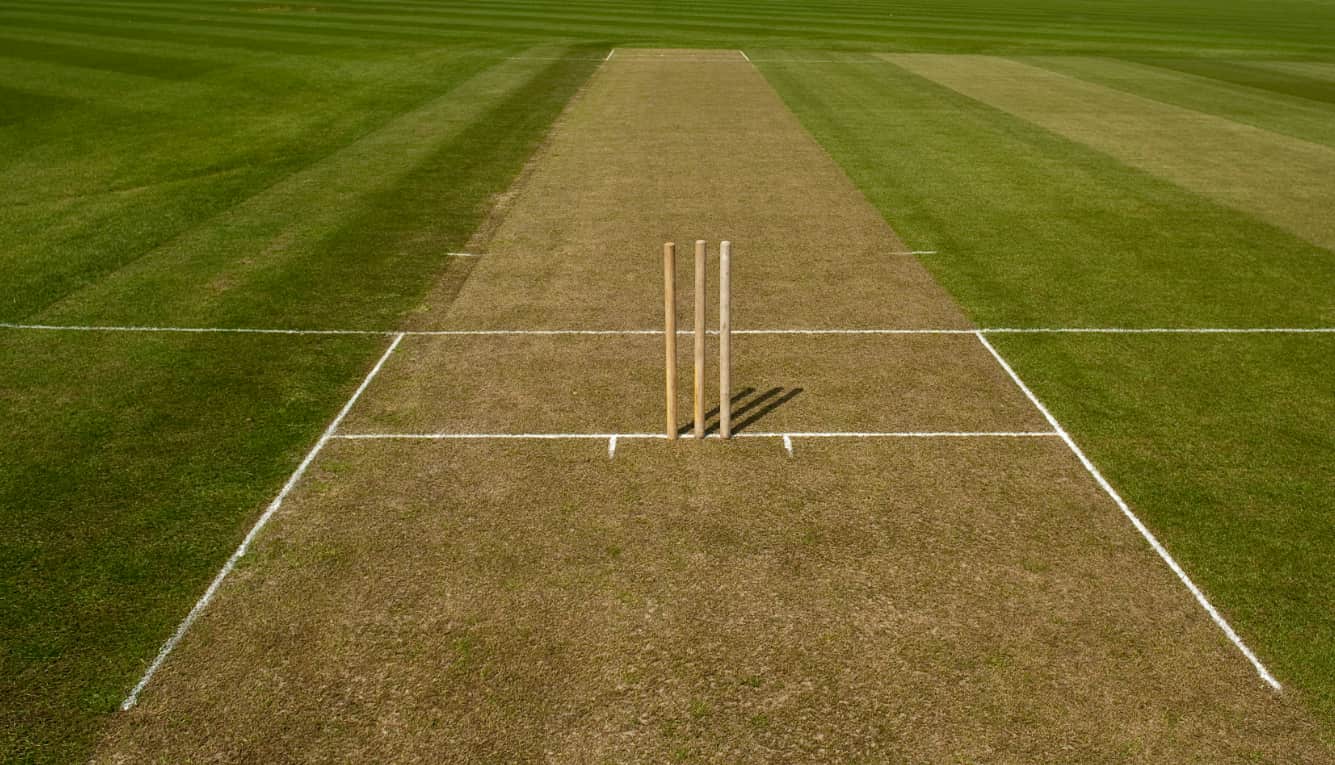
But that ends today. By the end of this lesson, you’ll know exactly what each crease does and why it matters in a match.
Let’s start simple and build from there.
Quick Answer Box
Before we dive deep, here’s the quick answer you came here for:
| Total Creases | Total Types | Ends | Format Differences |
|---|---|---|---|
| 8 | 3 | 2 | None — same everywhere |
That’s it. Eight creases total. Three different types. Both ends of the pitch. And the rules are identical whether you’re playing Test cricket, T20, IPL, or a school match.
Now let’s understand what these actually are.
What Are the 4 Creases in Cricket?
Here’s where it gets a bit tricky for beginners.
Technically, there are three types of creases. But at each end, there are four lines drawn — one popping crease, one bowling crease, and two return creases.
So when people ask “what are the 4 creases in cricket,” they’re usually talking about the four lines at one end of the pitch.
Let me show you this clearly:
| At One End of Pitch | Number of Lines | Type |
|---|---|---|
| Popping Crease | 1 | Horizontal (across) |
| Bowling Crease | 1 | Horizontal (across) |
| Return Crease (left) | 1 | Vertical (up-down) |
| Return Crease (right) | 1 | Vertical (up-down) |
| Total per end | 4 | 3 types |
So yes, there are 4 lines at each end. But only 3 different types of creases.
Multiply that by two ends, and you get 8 creases on the full pitch.
Still with me? Good. Now let’s look at each type individually.
Understanding the Popping Crease
The popping crease is the most famous line in cricket. This is the line that decides whether a batter is safe or out.
What is popping crease in cricket? It’s the front line that batters must reach to be considered safe while running.
Here’s what you need to remember:
- Location: 4 feet (1.22 meters) in front of the stumps
- Direction: Runs parallel to the bowling crease (straight across the pitch)
- Job for batters: Marks the safety zone — you must get behind this line when running
- Job for bowlers: If their front foot crosses this line during delivery, it’s a no-ball
- Grounding rule: Your bat or foot must be touching the ground behind this line, not just in the air
Simple classroom example:
Imagine you’re running between wickets. The fielder throws the ball to the stumps. The wicketkeeper catches it and breaks the bails.
Where were you when the bails came off? If even your bat tip is behind the popping crease and touching the ground, you’re safe. If not, you’re out.
Real match moment:
Remember when MS Dhoni used to whip off the bails in a flash? That’s when the popping crease becomes the most important line on the field.
Batters scrambling to get back, diving, stretching their bat — all trying to cross that white line before the stumps are broken.
Understanding the Bowling Crease
Now let’s talk about the bowling crease. This one’s easier.
What is bowling crease in cricket? It’s the line where the stumps are placed, and it controls where the bowler can deliver from.
Key teaching points:
- Location: Directly under the three stumps
- Length: 8 feet 8 inches (2.64 meters) long
- Direction: Runs across the pitch (perpendicular to the pitch length)
- Job: Marks the legal delivery zone for bowlers
The legal delivery rule:
When a bowler runs in to bowl, their front foot must land behind or on the bowling crease. If the foot completely crosses over, the umpire raises their arm and calls “no-ball!”
This is actually about the popping crease in front of the bowling crease, but both work together. The bowling crease is the reference point.
Why it matters:
A no-ball gives the batting team an extra run. In T20 and ODI cricket, it also gives a free hit on the next ball. That can completely change a match.
I’ve seen bowlers lose matches because they overstepped by just one centimeter on the final ball of a game. That’s how precise this rule is.
Understanding the Return Crease
This is the line most beginners forget about. But it’s just as important.
What is return crease in cricket? It’s the vertical line on each side of the stumps that controls the bowler’s back foot position.
What you need to know:
- Number: 2 return creases at each end (4 total on the pitch)
- Location: One on each side of the stumps, running vertically
- Minimum length: 8 feet behind the bowling crease
- Job: The bowler’s back foot must land inside this line (not outside it)
How it works:
When a bowler delivers the ball, umpires watch two things:
- Front foot at the popping crease
- Back foot inside the return crease
If the back foot touches or lands outside the return crease, it’s a no-ball – even if the front foot is perfectly legal.
Diagram-style breakdown:
| Bowler’s Foot | Legal Position | Result if Wrong |
|---|---|---|
| Front Foot | Behind a popping crease | No-ball if over |
| Back Foot | Inside return crease | No-ball if outside |
Teaching tip:
Think of the return crease like the sidelines in basketball. You can’t step outside them during play. Same concept here – the bowler must stay inside the zone.
Why Do We Have 8 Creases on the Pitch?
Now that you understand the three types, let’s answer the big question: how many creases are there in cricket?
The answer is 8 creases total. Here’s the complete breakdown:
| Crease Type | At Bowler’s End | At Batter’s End | Total |
|---|---|---|---|
| Popping Crease | 1 | 1 | 2 |
| Bowling Crease | 1 | 1 | 2 |
| Return Crease | 2 (left & right) | 2 (left & right) | 4 |
| Total Creases | 4 | 4 | 8 |
Both ends of the pitch are mirror images. This makes it fair — the same rules apply whether you’re batting or bowling from either end.
Why symmetry matters:
Imagine if one end had different creases than the other. That wouldn’t be fair, right? Having identical setups at both ends ensures the game is balanced. Every player gets the same pitch conditions.
Match Situations Where Creases Decide Everything
Let me tell you about some real match moments where creases became heroes (or villains).
- 1. Run-Out Drama
Picture this: Final over. Two runs needed. The batter hits the ball and runs. The fielder throws it to the keeper. Both stumps are broken. The third umpire zooms in frame by frame. Was the bat behind the popping crease when the bails came off?
This happens all the time in IPL and World Cup matches. Sometimes the decision goes down to a single frame — literally milliseconds.
- 2. Stumping Magic
Dhoni was the king of this. A spinner bowls. The batter steps out to hit. They miss. In a flash, Dhoni collects the ball and whips off the bails. Out? Only if the batter’s foot was outside the popping crease when the bails came off.
I’ve seen batters get stumped by half an inch. That’s the popping crease doing its job.
- 3. No-Ball Heartbreak
Test match. Final session. Bowler gets the last wicket needed for victory. Everyone celebrates. But wait — the umpire signals no-ball. The bowler’s front foot had crossed the popping crease by just a centimeter. The wicket doesn’t count.
Ben Stokes had this happen to him. It’s heartbreaking, but it shows how important these lines are.
- 4. World Cup Final Finish
The 2019 World Cup final between England and New Zealand came down to the super over. Every run mattered. Every run-out decision was reviewed at the crease. The popping crease literally decided who became world champions.
Creases in Different Cricket Formats
Students often ask me: “Sir, are the creases different in IPL? What about T20?”
Great question. Let me clear this up once and for all.
- How many creases are there in cricket T20?
Answer: 8 creases — the same as Test cricket.
- How many creases are there in the cricket IPL?
Answer: 8 creases — no difference from international matches.
- How many creases are there in cricket in India?
Answer: 8 creases — Indian cricket follows the same global rules.
Here’s a comparison table:
| Format | Total Creases | Measurements | Rules |
|---|---|---|---|
| Test Cricket | 8 | Standard | Same |
| ODI Cricket | 8 | Standard | Same |
| T20 International | 8 | Standard | Same |
| IPL | 8 | Standard | Same |
| Domestic India | 8 | Standard | Same |
| School/Club Cricket | 8 | Standard | Same |
The bottom line:
Whether you’re watching Virat Kohli in an IPL final or playing a match in your school ground, the crease rules are identical. The format might change how aggressive the batting is or how fast the game moves, but the white lines stay the same.
Crease Measurements: The Numbers You Should Know
Let’s talk measurements. This is important if you’re serious about cricket or want to set up your own practice pitch.
Cricket crease length in feet — complete table:
| Crease Name | Length/Width | Distance from Stumps | Direction |
|---|---|---|---|
| Popping Crease | Extends across pitch width | 4 feet in front | Horizontal |
| Bowling Crease | 8 feet 8 inches | At the stumps (0 feet) | Horizontal |
| Return Crease | Minimum 8 feet long | Extends from bowling crease | Vertical |
In metric (for those who prefer it):
- Popping crease: 1.22 meters in front of stumps
- Bowling crease: 2.64 meters long
- Return crease: 2.44 meters minimum length
Coaching tip:
When you’re setting up a practice pitch, these measurements matter. Even if you’re just practicing in your backyard, try to mark these lines properly. It helps you develop good habits — like knowing exactly where to ground your bat when running.
Understanding Creases in Hindi
Many students ask me to explain cricket rules in Hindi as well. So here’s a quick note.
- How many creases are there in cricket in hindi?
क्रिकेट की पिच पर कुल 8 क्रीज़ होती हैं — हर छोर पर 4। इनमें तीन प्रकार की क्रीज़ होती हैं: पॉपिंग क्रीज़, बॉलिंग क्रीज़, और रिटर्न क्रीज़।
Whether you’re learning cricket in English, Hindi, or any other language, the rules remain the same. Cricket is a global game with universal laws.
Frequently Asked Questions
- How many creases are there in a cricket game?
There are 8 creases total — 4 at each end of the pitch.
- Why are there two return creases at each end?
One on each side of the stumps to control the bowler’s back foot from both angles.
- Can a batter be safe if their bat is on the line?
No. The bat must be grounded behind the line, not on it.
- Do creases differ in women’s cricket?
No. All measurements and rules are identical across men’s and women’s cricket.
- What happens if the crease gets rubbed off during play?
Umpires can ask groundsmen to re-mark it during breaks or between overs.
- How do umpires check no-balls nowadays?
They watch the bowler’s feet in real-time. For close calls, the third umpire reviews slow-motion replays.
- Is there a penalty for repeated no-balls?
Yes. In some formats, bowlers can be taken off after repeated no-balls. It also affects team strategy.
- Can the wicketkeeper stand on the popping crease?
Not during the ball delivery. They must stay behind the stumps until the ball passes the batter.
- Do all cricket grounds have the same crease measurements?
Yes. International cricket laws require standard measurements worldwide.
- Why is it called “popping” crease?
The term comes from early cricket when batters would “pop” their bat into a hole at the crease to be safe. The name stuck even after the rule changed.
Final Class Summary
Alright, class, let’s wrap this up.
So, how many creases are there in cricket? You now know it’s 8 creases — made up of three types repeated at both ends of the pitch.
These white lines might look like simple paint on grass, but they control the entire game. From deciding if a batter is safe to checking if a bowler delivered legally, every crease has a critical job.
What you’ve learned today:
- There are 8 total creases (4 at each end)
- Three types: popping, bowling, and return
- The measurements are standard across all formats
- These lines decide run-outs, stumpings, and no-balls
- Both batters and bowlers must respect these boundaries
My coaching advice:
Next time you watch a cricket match — whether it’s IPL, a Test match, or even a local tournament – pay attention to these creases.
Watch how batters dive to get behind the popping crease. Notice how bowlers carefully place their feet. You’ll start seeing the game in a whole new way.
Cricket isn’t just about hitting boundaries or taking wickets. It’s also about these small details – the inches and centimeters that separate victory from defeat.
Now get out there and enjoy the game with your new knowledge!
Class dismissed. Go play some cricket!
Also Check:
