Hey, welcome to the team! So you’ve just joined cricket, and you’re probably feeling a bit nervous about your first practice match. That’s completely normal.
One of the scariest moments for new players is when the captain yells, “Go to deep cover!” and you freeze.
You have absolutely no idea where that is. Everyone else runs to their spots confidently, and you’re left standing there hoping someone will help.
This fear of looking foolish or standing in the wrong place stops many beginners from enjoying their first few matches.
You worry about letting the team down just because you don’t know where “point” or “mid-wicket” actually is.
Here’s the good news: every single player on your team felt the same way during their first match.
Those confusing names become second nature after just a few practices.
Contents
- 1 Cricket Fielding Positions 11 Players Explained
- 1.1 Quick Reference: Cricket Fielding Positions List
- 1.2 What Are Fielding Positions in Cricket?
- 1.3 Why Fielding Positions Matter?
- 1.4 Grouping Fielding Positions (Made Easy)
- 1.5 Fielding Restrictions and Rules (Made Simple)
- 1.6 Close-In Fielders (For Catching & Pressure)
- 1.7 Infielders (Inside the Circle)
- 1.8 Outfielders (Boundary Protection)
- 1.9 Behind the Wicket Fielders
- 1.10 Rare and Special Fielding Positions
- 1.11 Visualizing the Field Setup (Without a Diagram)
- 1.12 Most Common Fielding Setups (Simple Examples)
- 1.13 How Captains Decide Field Placements?
- 2 Pros and Cons of Fielding Setups
Cricket Fielding Positions 11 Players Explained
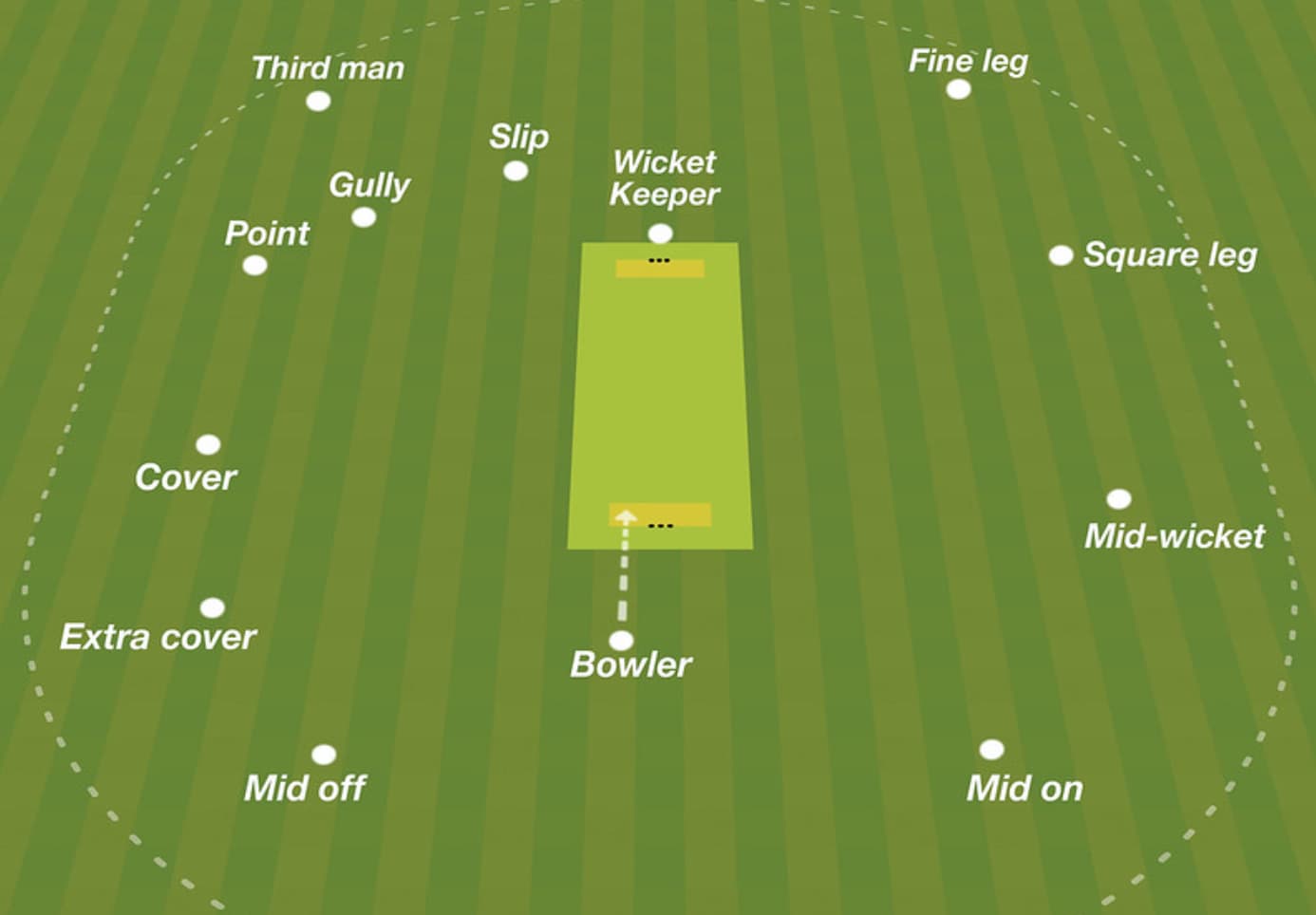
This guide explains Cricket Fielding Positions the way a senior teammate would, clearly, patiently, and without making you feel stupid for asking.
By the end, you’ll walk onto the field knowing exactly where to go when your captain calls out any position name. No more panic, just confidence.
Quick Reference: Cricket Fielding Positions List
Positions you’ll hear most often in your first matches:
- Wicketkeeper, Slip, Gully, Point, Cover, Extra Cover, Mid-off, Mid-on, Square Leg, Fine Leg, Third Man, Long Off, Long On, Cow Corner, Deep Midwicket, Short Leg, Silly Point, Deep Square Leg
What Are Fielding Positions in Cricket?
Okay, let’s start simple. Cricket Fielding Positions are specific spots on the ground where you stand during the match.
When your captain calls out a position name, they’re telling you exactly where to go and what area you’re responsible for defending.
Simple explanation: Fielding positions are named locations where players stop runs, take catches, and support bowlers.
Don’t worry about memorizing everything immediately. During your first few matches, your captain or senior teammates will physically point to where you need to stand. Just ask—nobody minds helping new players learn.
You’ll notice fielders constantly moving between deliveries. This happens because captains adjust positions based on where batters are hitting. If someone keeps hitting left, fielders move left. It’s that simple.
The key thing to remember: you’re not expected to know everything on day one. Cricket fielding takes practice, and everyone learns by doing.
Why Fielding Positions Matter?
Let me explain why learning positions actually helps you become a better player quickly.
- First, correct positioning gets you involved in the game. When you stand in the right spot, balls come to you. You make saves, take catches, and contribute actively. Wrong positioning means watching the ball go past you all match.
- Second, good fielding prevents easy runs. Every run you save matters. In close matches, saving 10-15 runs through smart positioning often decides who wins.
- Third, being in the right place creates catching chances. Imagine finally taking your first catch because you were standing exactly where the captain positioned you. That’s an amazing feeling.
Your priority isn’t being perfect—it’s understanding where to stand so you can participate confidently. The skills come with practice, but knowing positions helps immediately.
Grouping Fielding Positions (Made Easy)
Learning 50+ position names sounds impossible, right? Don’t worry—we’ll break them into small groups that make sense.
- Group 1: Very close positions (usually for experienced players wearing helmets)
- Group 2: Medium distance positions (inside the 30-yard circle—this is where you’ll probably start)
- Group 3: Far boundary positions (near the ropes—another beginner-friendly area)
- Group 4: Behind the batter (wicketkeeper and slips—needs specialized practice)
- Group 5: Rare positions (don’t worry about these for now)
Most captains place new players in Groups 2 or 3 because these positions are safest and easiest to learn. You won’t be asked to stand at a silly point (very close) during your first match—that requires experience.
Learning positions in groups means you tackle manageable chunks instead of overwhelming yourself with everything at once.
Fielding Restrictions and Rules (Made Simple)
Alright, here are the basic fielding rules you need to know before stepping onto the field.
- The 30-yard circle: You’ll see a painted circle on the ground. This marks the fielding restriction zone for limited-overs cricket.
Understanding Cricket fielding positions in powerplay is important for T20 and ODI matches. During powerplay overs (first 6 in T20, first 10 in ODI), only 2 fielders can stand outside this circle.
What does this mean for you? During power play, most players field inside the circle close to the pitch. After the power play ends, some players move to boundary positions.
- Leg-side limit: Maximum 2 fielders allowed behind the square on the leg side (left side for right-handed batters). If your team violates this, the umpire calls a no-ball.
- Maximum 5 on leg side: Never more than 5 total fielders on the leg side at any time.
- When you can move: You can adjust your position between deliveries. But once the bowler starts running in, you must stay completely still until the ball is bowled.
Don’t stress about memorizing all these rules immediately. Your captain will guide you, and umpires are usually understanding with new players.
Close-In Fielders (For Catching & Pressure)
Let me be honest with you – you probably won’t field in close-in positions during your first few matches. These spots require special skills and bravery.
Close-in fielders stand just 2-3 meters from the batter. They wear helmets and sometimes leg pads for protection because balls can come at them incredibly fast.
Positions like Silly Point, Short Leg, and Silly Mid-off need quick reflexes developed through months of practice. Experienced players handle these spots because they’ve trained specifically for close catching.
Why tell you about them? Because you’ll see teammates standing there and wonder why. Now you’ll understand they’re in attacking positions, trying to catch deflections and edges.
As you gain experience and confidence, your coach might start training you for these positions during practice sessions. But there’s zero pressure to field close-in as a beginner.
Focus on mastering safer positions first. Close catching comes later when you’re ready.
Infielders (Inside the Circle)
Here’s where you’ll likely spend most of your early matches—fielding inside the 30-yard circle.
When learning Cricket fielding positions 11 players for right-hand batsmen, remember this simple trick: Stand behind the bowler. The right side is called “off-side.” The left side is “leg-side.”
Common offside infield positions:
- Point stands square (sideways) on the right side.
- Cover and Extra Cover protect the area between the point and the straight fielder.
- Mid-off stands straight on the right.
Common leg-side infield positions:
- Mid-on is straight on the left side.
- Square Leg stands perpendicular on the left.
- Short Fine Leg waits near the wicket on the left.
Here’s what you actually need to do: Stop ground balls cleanly, throw accurately to the wicketkeeper or bowler, and back up throws from other fielders. That’s it. Keep it simple.
Your captain will probably start you at mid-off, mid-on, or cover because these positions are straightforward. You’ll see most balls, get plenty of practice, and build confidence quickly.
Many players find downloading a Cricket fielding positions 11 players PDF helpful for studying positions at home between practices.
Outfielders (Boundary Protection)
Boundary fielding is actually perfect for beginners. Let me explain why captains often place new players near the ropes.
Advantages for beginners: You have more time to react to balls coming toward you. Mistakes are less costly. You’re not under constant pressure like infielders.
Common boundary positions:
- Long Off and Long On guard straight boundaries.
- Deep Cover protects the right-side boundary.
- Deep Square Leg and Deep Fine Leg cover left-side boundaries.
- Third Man stands behind the wicket on the right side.
In Cricket, fielding positions 11 players in T20 matches you watch. You’ll notice 5-6 boundary fielders during death overs. This is normal because batters attack aggressively.
For Cricket fielding positions 11 players in test matches, fewer boundary fielders appear early on. Teams use more close catchers initially.
Your job as a boundary fielder: Stop balls from reaching the rope (saving fours), catch high shots if they come to you, and throw accurately back to the keeper.
Don’t worry about spectacular diving stops on day one. Focus on clean fielding and accurate throws. The athletic saves come with practice and confidence.
Behind the Wicket Fielders
Wicketkeeper is a completely specialized role requiring dedicated training. You won’t be asked to keep wickets in your first match unless you’ve specifically trained for it.
- Wicketkeepers wear gloves, crouch behind stumps every delivery, and need exceptional concentration and quick hands. Most teams have designated keepers who’ve practiced this role extensively.
- Slip fielders (First Slip, Second Slip, Third Slip) line up beside the keeper, catching edges from fast bowling.
- Gully stands wider, catching thicker edges.
- Why you probably won’t start here: Slip catching requires soft hands, sharp reflexes, and lots of practice. Dropping catches in the slips affects team morale, so captains place experienced players there.
What if you want to become a keeper or slip fielder? Tell your coach. They’ll include you in specialized drills during practice sessions. With dedicated training, you can develop these skills over time.
For now, focus on mastering your assigned position. Wicketkeeping and slip catching are advanced skills you can learn later.
Rare and Special Fielding Positions
Good news – you definitely won’t see these positions in your first matches. They’re tactical spots used occasionally by experienced captains.
- Long Stop stands behind the wicketkeeper as backup. Rarely used in proper cricket, mainly in junior matches with learning keepers.
- Fly Slip is a deeper slip position between standard slips and the third man.
- Leg 45 positions at a 45-degree angle on the leg side for specific bowling plans.
- Short Third Man is a close-in version of the third man for delicate edges.
Why mention them? So you’re not confused if you hear these names during advanced matches later. For your first season, these positions won’t concern you at all.
Stick to learning the 15-20 common positions first. Rare positions are for tactical situations you’ll understand after gaining experience.
Visualizing the Field Setup (Without a Diagram)
Let me teach you the simplest way to picture Cricket Fielding Positions while standing on the ground.
- Step 1: Stand at the center of the pitch facing the batter’s end.
- Step 2: Divide the field mentally into left, right, and straight areas.
- Right side = off-side (for right-handed batters) = point, cover, mid-off, third man
- Left side = leg-side (for right-handed batters) = mid-on, square leg, fine leg
- Straight ahead = long-off and long-on at the boundary
Many new players find the Cricket field positions name with image charts incredibly helpful.
Ask your coach if they have printed diagrams you can study. Visual learning combined with actual practice makes everything click faster.
If you have a smartphone, consider downloading the Cricket Fielding Positions 11 players app that shows positions interactively. These apps let you practice identifying positions at home.
During practice, ask senior players to physically walk you to each position. Seeing and standing at actual spots builds memory much better than just reading about them.
Most Common Fielding Setups (Simple Examples)
Here are three basic field setups you’ll experience in your early matches.
- Setup 1: Standard Fast Bowling Two slips, gully, point, cover, mid-off, mid-on, square leg, fine leg. You’ll probably field at mid-off, mid-on, or cover in this setup.
- Setup 2: Spin Bowling One slip, silly point (experienced player), mid-wicket, cover, long-on, long-off, deep square leg. You might be at cover or a boundary position.
- Setup 3: T20 Death Overs Long-off, long-on, deep mid-wicket, deep cover, deep square leg, third man, fine leg. If you’re playing T20, expect to field on the boundary during final overs.
- What you should know: Fields change constantly. Your captain might move you between deliveries. This is normal—just jog to your new position quickly and stay focused.
Don’t panic if you’re initially confused. Within 2-3 matches, these movements become automatic.
How Captains Decide Field Placements?
Understanding why your captain keeps moving fielders helps you anticipate position changes.
- Captains watch the batter carefully. If someone keeps cutting balls square, fielders move to that area. If someone pulls often, leg-side fielders increase.
- Captains match fields to bowler types. Fast bowlers get slip fielders. Spinners get close catchers. You’ll notice these patterns quickly.
- Captains consider the match situation. Defending small totals? More attacking fields. Protecting big totals? More boundary fielders.
- Captains adjust to formats. Test cricket allows aggressive catching positions. T20 cricket needs boundary protection.
- Why does this matter to you? Understanding these decisions helps you predict where you might field next. It also shows cricket is a thinking game, not just hitting and bowling.
Your job is to listen to instructions and move quickly when called. The tactical nuances come with experience.
Pros and Cons of Fielding Setups
Advantages:
- Stops boundaries and limits scoring effectively
- Creates catching chances in key positions
- Applies pressure on batters mentally
- Adapts to different situations quickly
Disadvantages:
- Wrong setups allow easy runs through gaps
- Too many close fielders leave boundaries exposed
- Requires quick communication and adjustments
- Fails if bowlers don’t bowl to the plan
As a new player, you’re not responsible for these strategic decisions. Your captain handles field placement. You just need to execute your assigned role well—stop balls cleanly, catch chances, and throw accurately.
FAQs – Beginner Questions Answered
- I’m scared of standing in the wrong position. What should I do?
Just ask your captain or teammates immediately. Everyone helps new players, and it’s much better to ask than guess incorrectly.
- What if I miss a catch or misfield badly?
It happens to everyone, even professional players. Learn from it, shake it off, and focus on the next ball. Your team understands you’re learning.
- Which positions are easiest for complete beginners?
Mid-off, mid-on, and boundary positions like long-on or deep cover. These give you time to react and build confidence.
- Can I refuse to field at a silly point if asked?
Yes, be honest if you’re not comfortable. Captains won’t force beginners into dangerous positions without proper training.
- How long does it take to learn all the positions?
Most players memorize common positions within 2-3 weeks of regular practice. Rare positions come later.
- What if I don’t understand the captain’s instructions?
Ask for clarification immediately. Captains prefer questions over fielders standing in the wrong spots.
- Do I need special equipment for fielding?
Just comfortable cricket shoes with good grip. Close-in fielders need helmets, but you won’t field there initially.
- Why do fielders keep moving between balls?
Captains constantly adjust based on where batters are hitting. This is normal—just move quickly to your new position.
- Is it okay to make mistakes during my first match?
Absolutely. Everyone makes mistakes. Focus on effort, learning, and improvement rather than perfection.
- How can I practice fielding positions at home?
Study diagrams, watch cricket matches, use fielding apps, and mentally visualize positions while imagining yourself on the field.
- What’s the most important skill for a beginner fielder?
Clean ground fielding and accurate throwing. Master these basics before worrying about spectacular catches.
- Should I study all positions or just my assigned one?
Learn your assigned position thoroughly first, then gradually understand others. Complete knowledge comes with experience and time.
Conclusion – Understanding Fielding Makes Cricket Easier
Congratulations! You’ve just learned all the fundamental Cricket Fielding Positions you need to start your cricket journey.
I know it seems like a lot of information right now, but trust me – after just 2-3 practice sessions, everything becomes automatic. Those weird position names will roll off your tongue naturally.
Remember, every excellent fielder started exactly where you are today. They felt the same confusion and nervousness. The difference? They kept practicing and learning.
During your first match, don’t be afraid to ask teammates where positions are. Cricket has amazing camaraderie, and players genuinely enjoy helping newcomers learn the game.
Study the positions between practices, watch professional matches to see field setups in action, and most importantly, enjoy the learning process.
Cricket is an incredible sport, and you’ve just taken your first real step into understanding it.
Next time your captain yells “Deep mid-wicket!” – you’ll know exactly where to go. Welcome to cricket. You’ve got this!
Also Check:
